What Is a Cauldron? Meaning, Uses & Choosing One
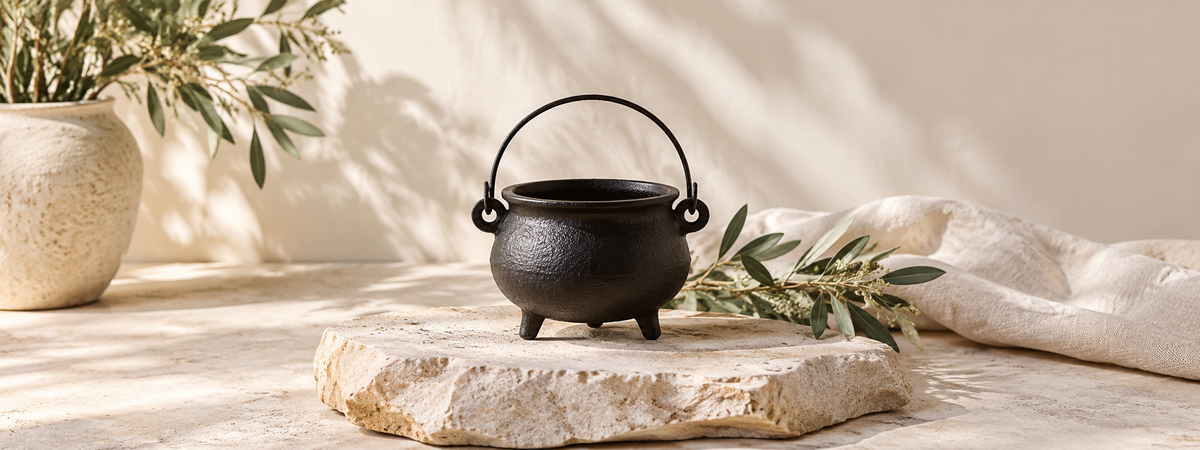
A cauldron is a pot-shaped vessel traditionally associated with cooking over a fire. Today, small cauldrons are also used as decorative objects and ritual tools. Their purpose depends on their design: an altar piece, an incense burner and a food-safe cooking pot are not interchangeable.
From cooking vessel to ritual symbol
Historical cauldrons had practical roles in preparing and sharing food. The British Museum’s Battersea cauldron record describes a bronze vessel associated with cooking and communal feasting.
In contemporary spiritual practice, a cauldron can represent transformation, renewal or the act of bringing an intention into focus. The meaning depends on the person and their tradition. You do not need a cauldron to begin a personal practice, but you may enjoy having a vessel that feels meaningful to you.
Ways to use a ritual cauldron
- A written intention: place a folded note inside an unlit cauldron and return to it during journalling or reflection.
- An altar display: use a clean, dry vessel as a focal point among objects you value. Choose a stable spot where it will not be knocked over.
- A seasonal ritual: mark a change of season or a new beginning with a quiet moment and a note about what you would like to carry forward.
- Compatible incense use: only burn incense or charcoal in a vessel specifically suitable for that purpose, following the product instructions.
A ritual can be meaningful without smoke, flame or an elaborate setup. For more ideas, read our guide to using crystals in everyday rituals.
How to choose a cauldron
Begin with its intended use, then consider its size, weight and design. Check the listing’s dimensions so it fits your space, and choose symbolism you enjoy, such as a triple moon cauldron or tree of life cauldron.
Material alone is not a safety guarantee. Cast iron, brass and ceramic pieces can have different finishes and uses. Check whether your specific piece is designed for display, incense, charcoal or cooking. Do not use a decorative or incense vessel to prepare food or drinks unless the maker explicitly identifies it as food-safe for that use.
Heat and handling
If you choose to burn incense, follow the instructions for the vessel and the incense. Use the specified heat-resistant support and location, keep the area clear of flammable items and keep children and pets away. Never carry or reposition a cauldron while it is burning or hot; let it cool completely before handling.
A handle can become hot, legs do not guarantee protection for furniture, and a lid does not make fumes harmless. Fire and Rescue NSW advises keeping candles and incense burners away from curtains and never leaving them unattended. Read the NSW Government’s home fire-safety guidance for further information.
Find a piece for your practice
Browse our incense burners and cauldrons, then check the individual listing for its intended use and care. If you are choosing a compatible resin setup, you can also explore our resin incense collection.